Narratives are not decoration added to diplomacy — they are its substance. Every diplomatic act, from a bilateral negotiation to a UN Security Council address, takes place within narrative frameworks that determine what can be said, what will be heard, and what kind of agreement is possible. Diplomats who understand how narratives work — how they are constructed, projected, and contested — operate with a fundamental advantage over those who do not.
This workshop develops the practical capacity to recognise, analyse, construct, and deploy narratives and stories in international relations and diplomatic practice. It draws on narrative theory, strategic communication research, and the study of diplomatic practice to build skills that are immediately applicable across the full range of diplomatic settings — from bilateral negotiations to public diplomacy, from multilateral institutions to digital media environments.
The workshop addresses one of the most consequential and least formally taught dimensions of diplomatic work: the ability to tell a story that moves people, to construct a narrative that frames a situation on your terms, and to understand the narrative your adversary is telling well enough to engage it rather than talk past it. It also addresses the growing challenge of visual politics — how images construct and contest political narratives — and the transformation of diplomatic storytelling in the digital age.
Topics include: the distinction between narratives and stories, and why it matters for diplomatic practice; how political narratives are constructed, projected, and received; storytelling as a diplomatic performance — the difference between stating a position and making someone feel it; narration as a diplomatic skill — constructing coherent, credible accounts under pressure; narrative projection and strategic narrative — how diplomats shape the interpretive frameworks within which policy is judged; visual politics and the power of images in international affairs; digital diplomacy and social media storytelling; narrative conflict and narrative bargaining — what happens when the stories of adversaries are irreconcilable; and the practical craft of narrative analysis, construction, and negotiation.
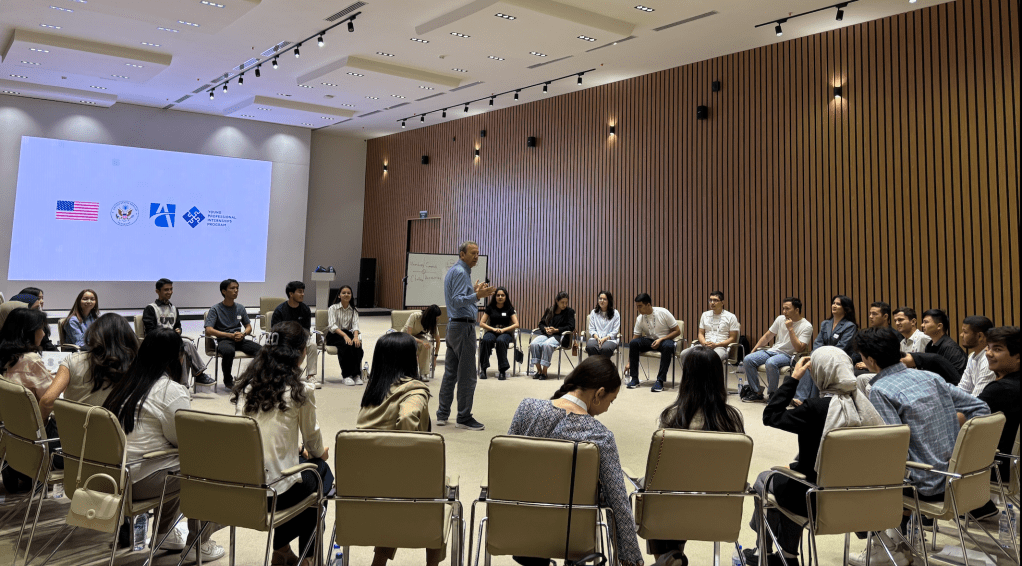
Learning environment: The session takes place in a sufficiently large room with chairs arranged in a circle. Tables are not used: they create distance and inhibit the quality of interaction that makes the learning real. Video recording is not permitted, as it affects both confidentiality and the natural dynamics of group interaction. Photography is welcome before or after the workshop.
Timeframe: 4 hours with a 15-minute break.
Optimal group size: from 12 to 30 participants.